
Stripe Connect is usually one of the first solutions teams consider when they need to pay out sellers, drivers, or creators, largely because it fits seamlessly into businesses already using Stripe for customer payments. But there's a trade-off: Connect only provides the underlying infrastructure, so you still have to manage connected accounts, KYC requirements, and payout schedules yourself. That's where a newer generation of payment platforms has emerged. These services are designed to reduce that operational burden. Here's how nine alternatives compare, including one that solves a slightly different problem than the rest.
Tipalti
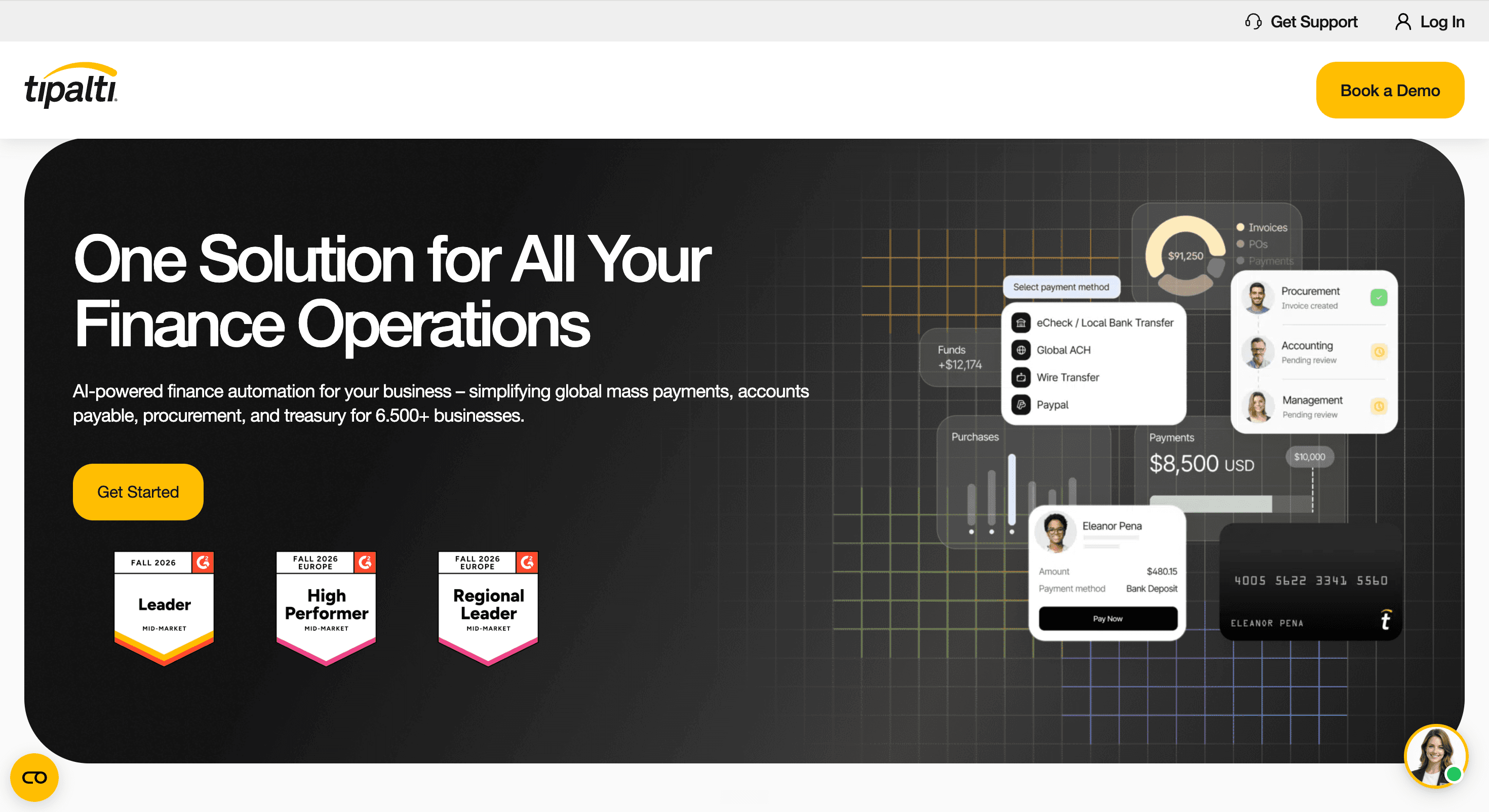
Tipalti has the widest geographic reach of the group - it supports 200-plus countries and 120 currencies. The platform combines accounts payable automation, tax compliance, FX management, and fraud detection bundled in rather than as separate add-ons.That makes it attractive to businesses looking for an all-in-one payout solution. The trade-offs are cost and implementation time. Plans begin at roughly $99 a month, and Routable's comparison puts full enterprise implementation at three to six months, which can be a significant lead time for businesses that need to launch payouts by next quarter..
Hyperwallet
Hyperwallet takes a different approach. The PayPal-owned platform uses pre-hosted payee details, which can accelerate deployment and reduce some of the work involved in setting up recipients. Pricing is typically around $3 per active payee wallet per month, with an additional $1 to $3 charged per transaction. Its coverage is more limited, however, topping out at roughly 24 currencies. Smaller payout programs may also be directed to PayPal or Venmo, making Hyperwallet a particularly natural fit when recipients already use those services. In that situation, the familiar PayPal ecosystem can do some of the onboarding work for you.
PayPal Payouts
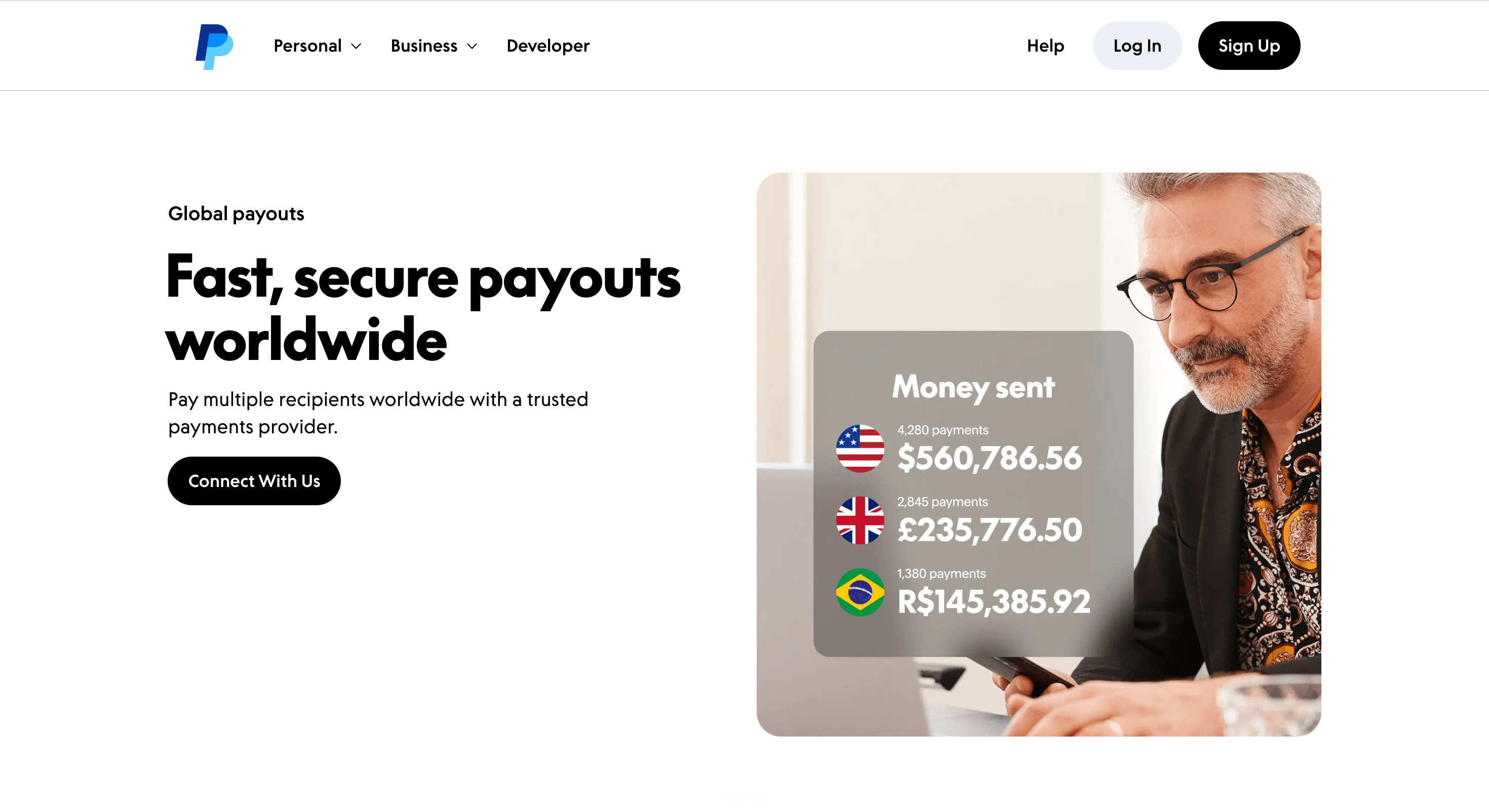
Worth separating from its sibling Hyperwallet, since it's the more self-service option: 240-plus countries, 40-plus currencies, a flat 2% domestic fee, and country-specific rates internationally. The real advantage isn't a feature on a specification sheet; it's brand recognition. When onboarding thousands of freelancers who've never heard of your platform, existing trust in PayPal can matter more than individual features.
Payoneer
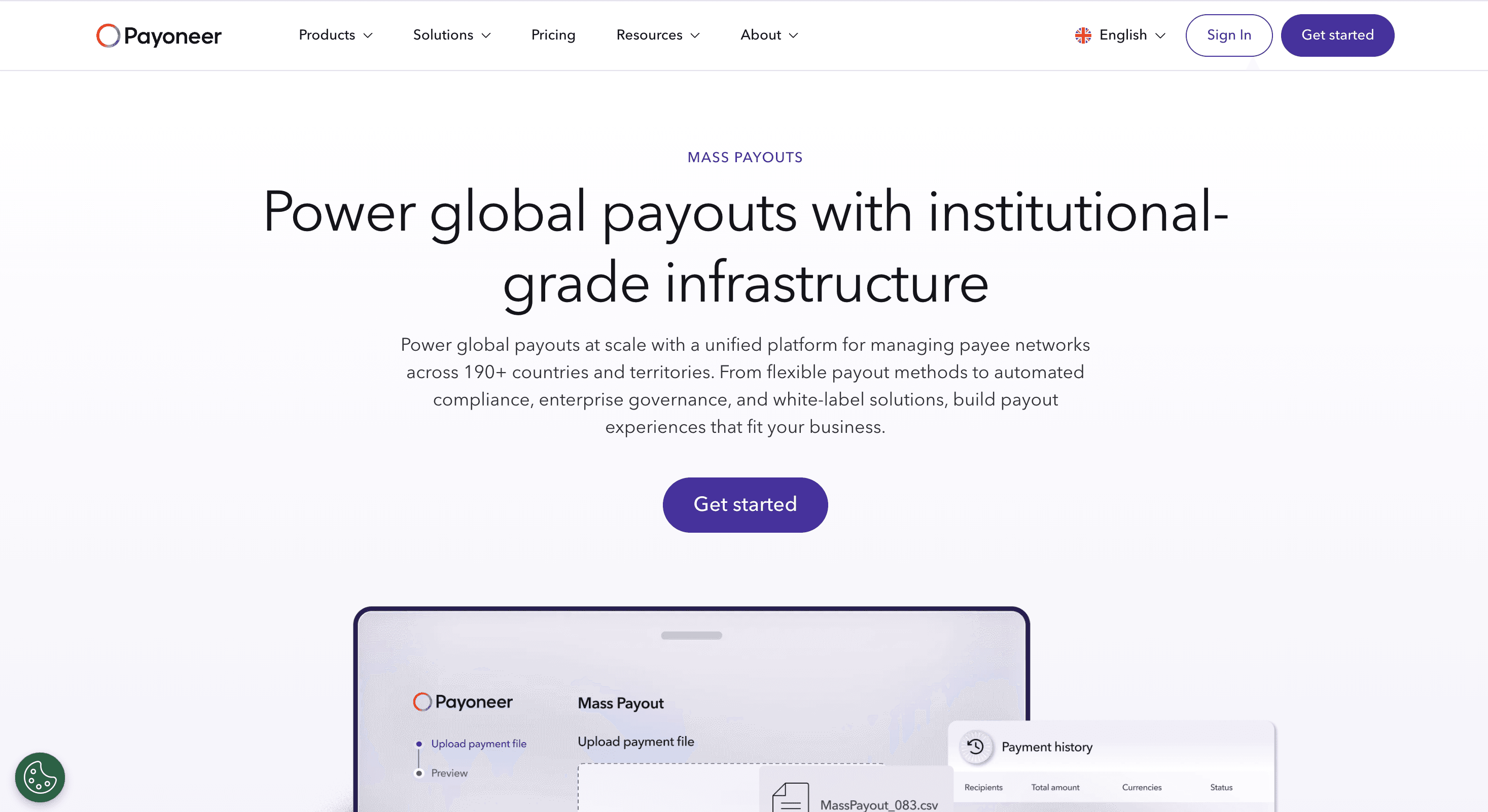
Payoneer's pricing structure is simpler: there's no monthly fee. Instead, it charges businesses between 1% and 3.99% per transaction, depending on how the payment is made. Payoneer can also handle batches of up to 1,000 payments at a time and connects with QuickBooks to reduce the workload associated with reconciliation. That pricing model is particularly useful for startups. You don't need to take on a setup fee before you've even tested the platform, so a young company can run a payout cycle and evaluate the platform before making a larger commitment .
Wise Business
Differentiates itself from other payout alternatives by using exchange-rate pricing. Rather than adding a markup, Wise sets its price at the mid-market rate and ensures the price remains fair by updating it with live data while the FX market is open. This is a huge advantage for businesses that make substantial international payments since the rate stays consistent regardless of trade volume. The downside is a narrower transaction set than other platforms on this list. Wise Business has no deep tax-compliant layer or dedicated fraud-detection suite. However, it offers competitive currency conversion across more than 70 countries.
Trolley
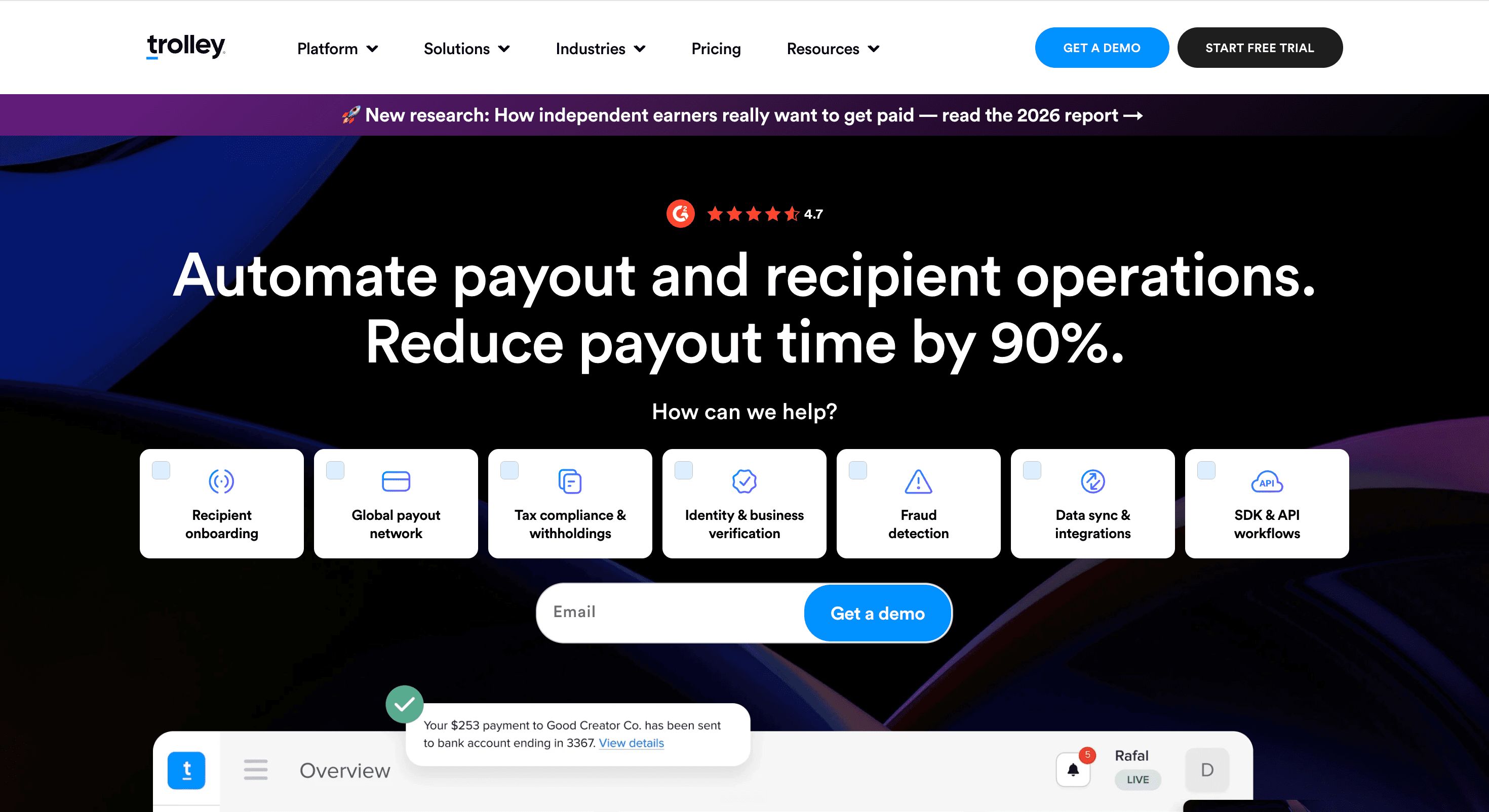
Trolley takes a modular approach, which can make its pricing more attractive for businesses that don't need the entire stack. Payments start at $49 per month, tax handling is $199, and sync costs another $35. Higher-volume businesses can move to a custom Trolley Plus plan. Trolley supports more than 215 countries and can generate IRS- and DAC7-compliant tax forms in 36 languages. That's a useful combination for companies paying recipients across multiple regions, particularly as international tax reporting becomes too complicated to manage internally. Businesses can build this infrastructure themselves, but many teams prefer to avoid the associated complexity.
Routable
Routable is a payment orchestration platform that allows businesses to organize high-volume mass payouts, making it useful for marketplaces or agencies that need to make multiple international monthly payments.It also offers API integrations and website integrations, allowing marketplaces and agencies to build payout functionality directly into their existing workflows and give recipients greater control over their payment experience.
Checkbook
Checkbook takes an even simpler approach. It supports ACH, virtual cards, and digital checks, giving businesses multiple payment options for different markets. However, that flexibility can come with higher costs in certain circumstances. The platform has a unique approach to payments, allowing merchants to issue digital checks via email, SMS, or an API call, with recipients able to choose ACH, RTP, FedNow, push-to-card, or a printed check as their deposit method.
However, its limitations become more apparent as payment requirements become more complex.: there are no ERP integrations, and retry capabilities are relatively limited once payment volumes start to climb.
Where Talentir Fits
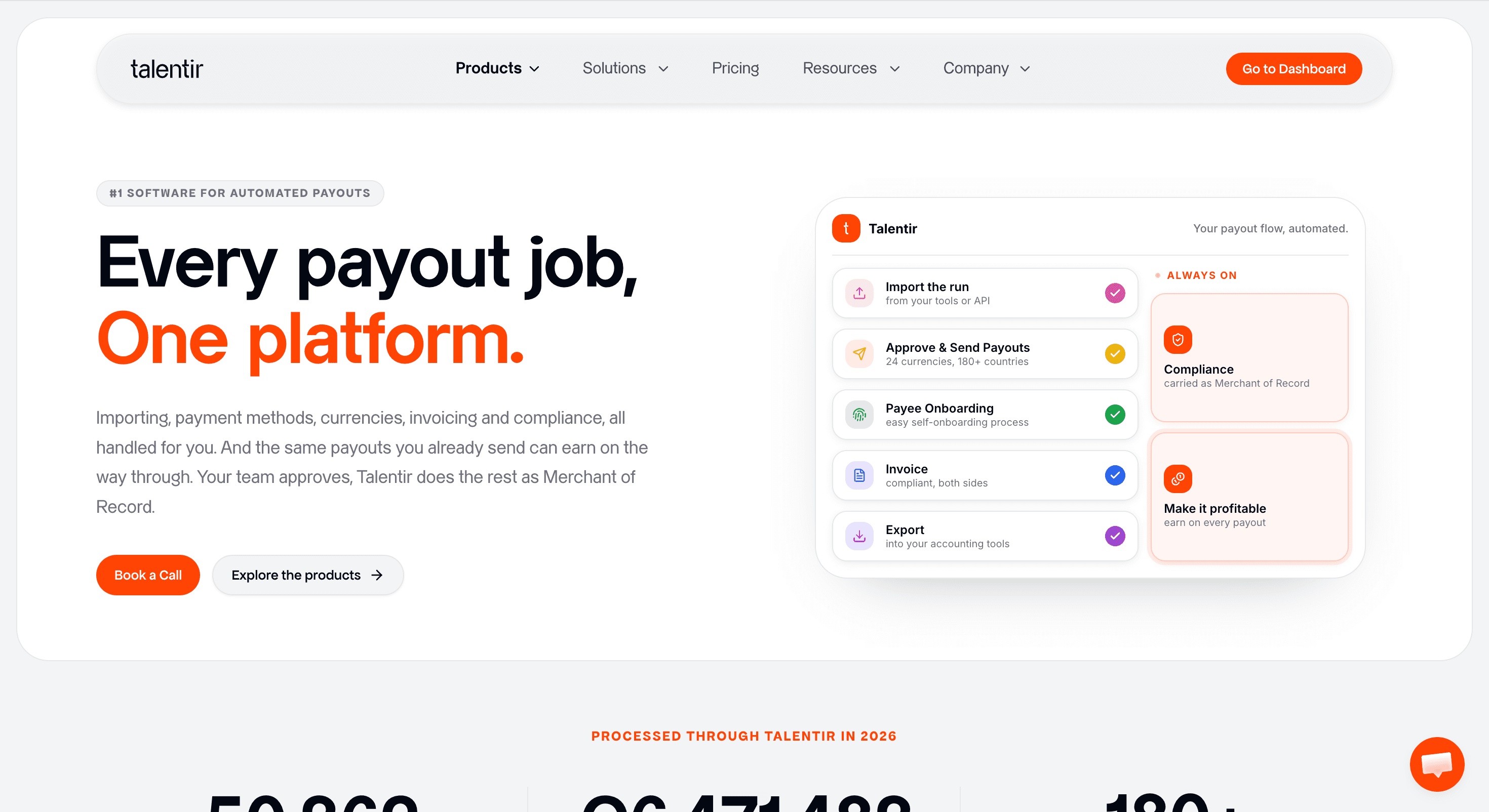
Most of the platforms above still require businesses to manage aspects of compliance, tax handling, and payout timing, even when their marketing emphasizes “automation". Talentir approaches the problem differently. Rather than simply providing the infrastructure, it acts as the merchant of record for each payout. That shifts responsibilities such as tax registration, regulatory compliance, and related liability away from the paying company's finance team and onto Talentir.
Its international reach is another differentiator. Payouts reach 180-plus countries in seconds, rather than the multi-day timelines some competing platforms advertise. And because compliance is handled as part of the core service rather than being carved out into a separate module, businesses don't have to spend as much time figuring out which pricing tier covers specific tax or reporting features.
None of these platforms is inherently better than Stripe Connect on paper. But the platforms are solving different variations of the same underlying problem. Stripe Connect gives businesses the building blocks; these alternatives are designed to reduce some of the work that comes after those building blocks are in place. The better choice ultimately comes down to the business itself, how widely distributed the payees are, and whether the business would rather own compliance itself or hand it off entirely.
Make Payouts easy with Talentir
Pay anyone worldwide, in seconds. We take care of payee onboarding and offer multiple currencies and payout methods. Enjoy automatically generated invoices, 1-click bookkeeping and multiple features to make payouts profitable.